



چهار آسیاب نورد بالا
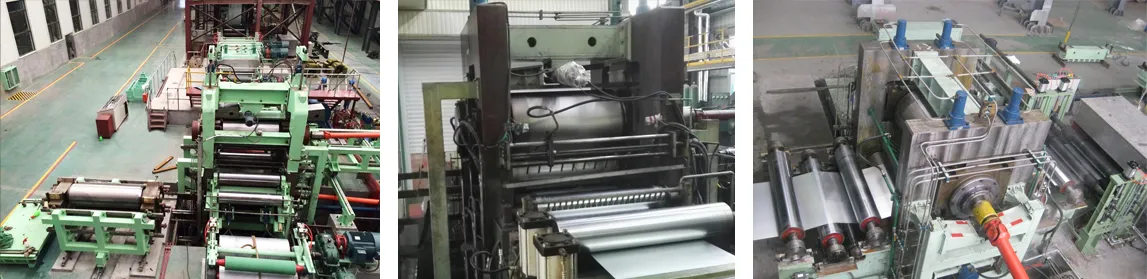
/Unraveling the Precision and Efficiency of the Four-High Rolling Mill In the realm of metallurgy and material processing, the four-high rolling mill stands as a paragon of engineering excellence, championing advancements that enable precision, quality, and cost-effectiveness. Known for its capability to exert higher reductions and produce uniform thickness in metal sheets, the four-high rolling mill is indispensable in modern industrial applications. Drawing from decades of industrial innovations and experience, experts continuously attest to its remarkable contributions in various sectors. The four-high rolling mill, fundamentally, comprises two small diameter working rolls and two larger support rolls. This configuration is expertly designed to overcome some of the key limitations inherent in other rolling mills, offering solutions to challenges such as roll deflection and material uniformity. The smaller working rolls mean reduced torque required, which is critical in maintaining the mill's energy efficiency—a vital factor for industries aiming to decrease operational costs while adhering to sustainability targets. One of the defining features of the four-high rolling mill is its unmatched precision . Companies specializing in high-quality sheet metal production rely heavily on the capabilities of these mills to produce product thicknesses with minimal deviation. With industries such as automotive and aerospace demanding rigorous standards for material integrity and performance, the precision offered by four-high rolling mills becomes non-negotiable. In fact, expert operators often highlight how the tight control over product dimensions consistently leads to lower rejection rates and enhanced customer satisfaction. Expertise in utilizing the four-high rolling mill extends beyond mere operation; it encompasses maintenance, technological innovations, and process optimization. Experienced professionals underline the importance of regular calibration and maintenance of the mill to prolong its operational lifespan and maintain its accuracy. Incorporating modern control systems and automation technologies has also been pivotal in advancing the operational capabilities of these mills. Automated thickness control, for instance, ensures real-time adjustments depending on the material flow, a feature that significantly minimizes downtime and material wastage. four-wave rolling stock Authoritativeness in the domain of rolling mills comes with an understanding of material properties and the physics of rolling. Metallurgists and mechanical engineers dedicated to this field invest substantial efforts in studying how varying materials respond to the pressures exerted by four-high mills. Their research continually pushes the boundaries of what these machines can achieve, resulting in enhanced product quality and new application avenues. Through academic publications, industry conferences, and collaborative workshops, these experts disseminate their insights, collectively elevating the entire industry's knowledge base. Trustworthiness of the four-high rolling mill stems not only from its long-standing presence in industrial operations but also from its proven track record in producing high-quality finishes over vast production runs. Companies often cite case studies where the integration of four-high rolling mills led to improved efficiency metrics and product quality benchmarks, illustrating the technology's robust reliability. Client testimonials frequently emphasize how the mills' consistency and precision have enabled them to meet stringent project specifications and deadlines. Furthermore, leading manufacturers of four-high rolling mills continually invest in state-of-the-art research and development. This commitment to progress ensures that these machines evolve alongside technological advancements, thus retaining their competitive edge in a rapidly changing industrial landscape. The integration of IoT and smart manufacturing technologies is an emerging trend that promises to bring unprecedented levels of process transparency and predictive maintenance capabilities to these mills. In conclusion, the four-high rolling mill epitomizes innovation in material processing, with its design and functionality fine-tuned through decades of real-world applications. It remains an authoritative tool in the production of high-quality metal sheets, revered for its precision, efficiency, and reliability. As industries continue to demand higher standards and more cost-effective solutions, the four-high rolling mill undoubtedly stands ready to meet these challenges head-on, supported by a wealth of expert knowledge and continuous technological advancements.

We have successfully executed over 500
projects around the world,
many first-of-their-kind
research projects and products in China, including
We have successfully executed over 500
projects around the world,
many first-of-their-kind
research projects and products in China, including
-
2004
The 1st hydraulic AGC system for hot rolling of ribbon steel
-
2006
The 1st AFC system used for 1450mm skin pass mill
-
2009
The 1st 5-stand tandem line with 2-stand POR & Uncoiler for 650mm ribbon steel
-
2012
The 1st reversing mill for 1380mm strip
-
2016
The 1st soft-rolling system used in skin pass mill
-
2019
The 1st fully automated medium-width tandem cold rolling mill
-
2021
The 1st 5000KN Twin-stand double skin pass mill
-
2022
The 1st coupled pickling line & tandem cold mill with two modes - big roller & small roller

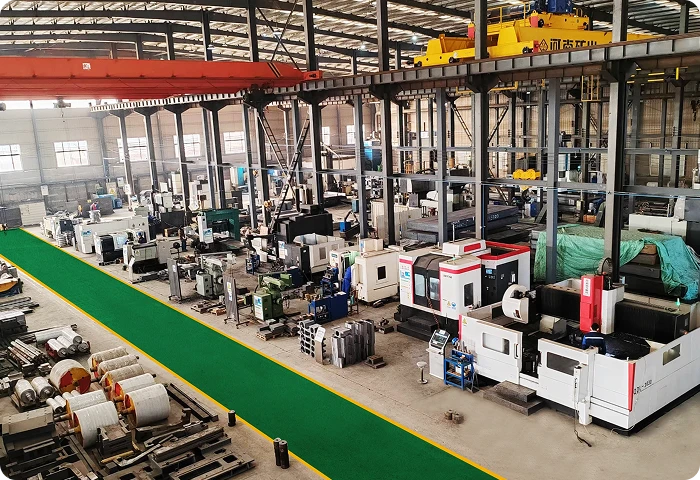
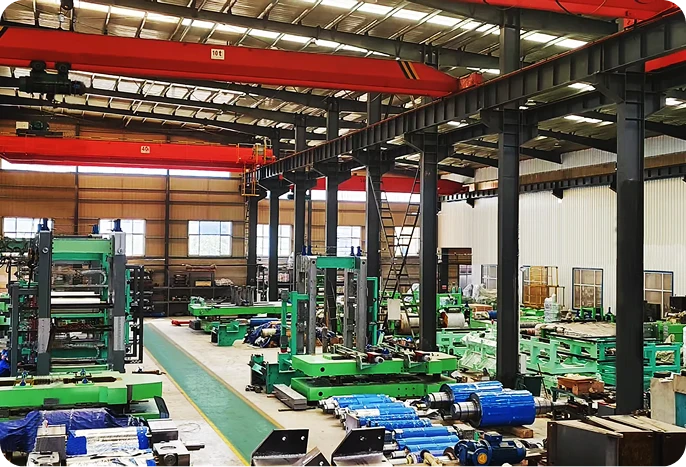
Yang Wang Li Xin operates a state-of-the-art facility over 66,000 square meters,and our manufacturing facility is fully equipped with high-tech machinery and high-capacity cranes. This enables us to handle large work pieces measuring 4.5m in width, 10m in length, and 1.5m in height, guaranteeing our capacity to produce 1800mm skin-pass mills and 1450mm rolling mills. The individual piece can weigh up to 100 tons.


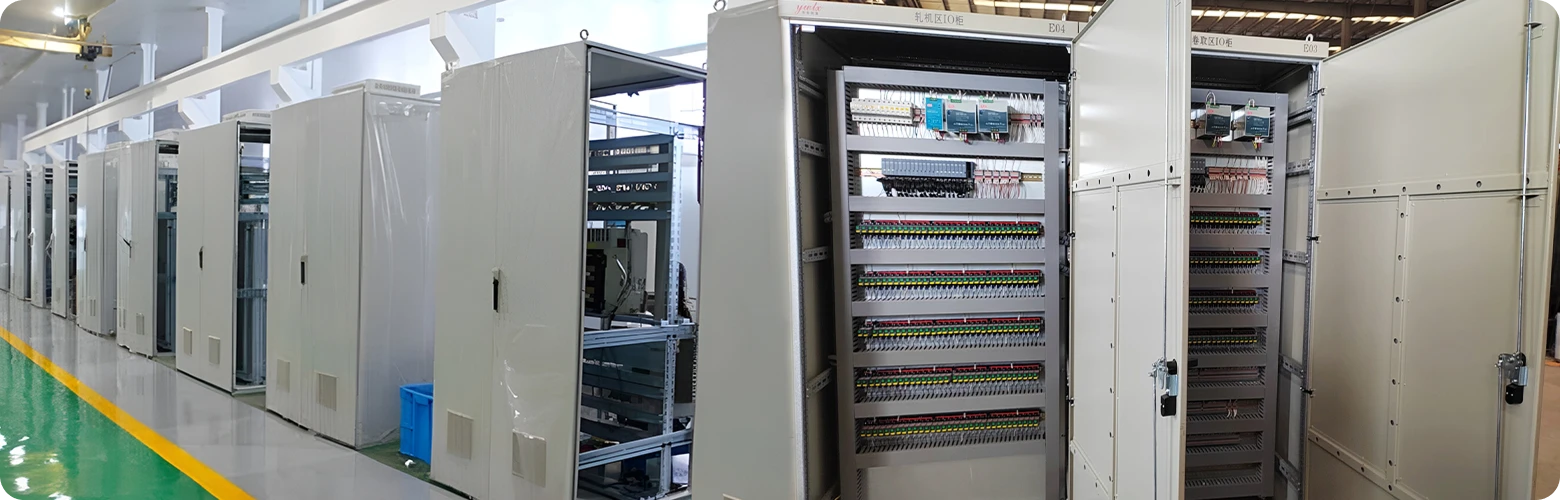
Quality is fundamental to the enterprise survival. We have established a comprehensive and meticulous quality management system and have successfully obtained ISO14000 certification. Starting from the design source, it supervises the entire production cycle, including design, procurement, processing, assembly, in-factory testing, installation, and online commissioning. The workshop is equipped with measuring tools like vernier calipers, spectrometers, hardness testers, and ultrasonic flaw detectors. They are used to check materials and control tolerances to ensure the final equipment meets or exceeds requirements. All products have a unique code, This enables the easy identification and traceability of the equipment components and ensures full control of quality.


-
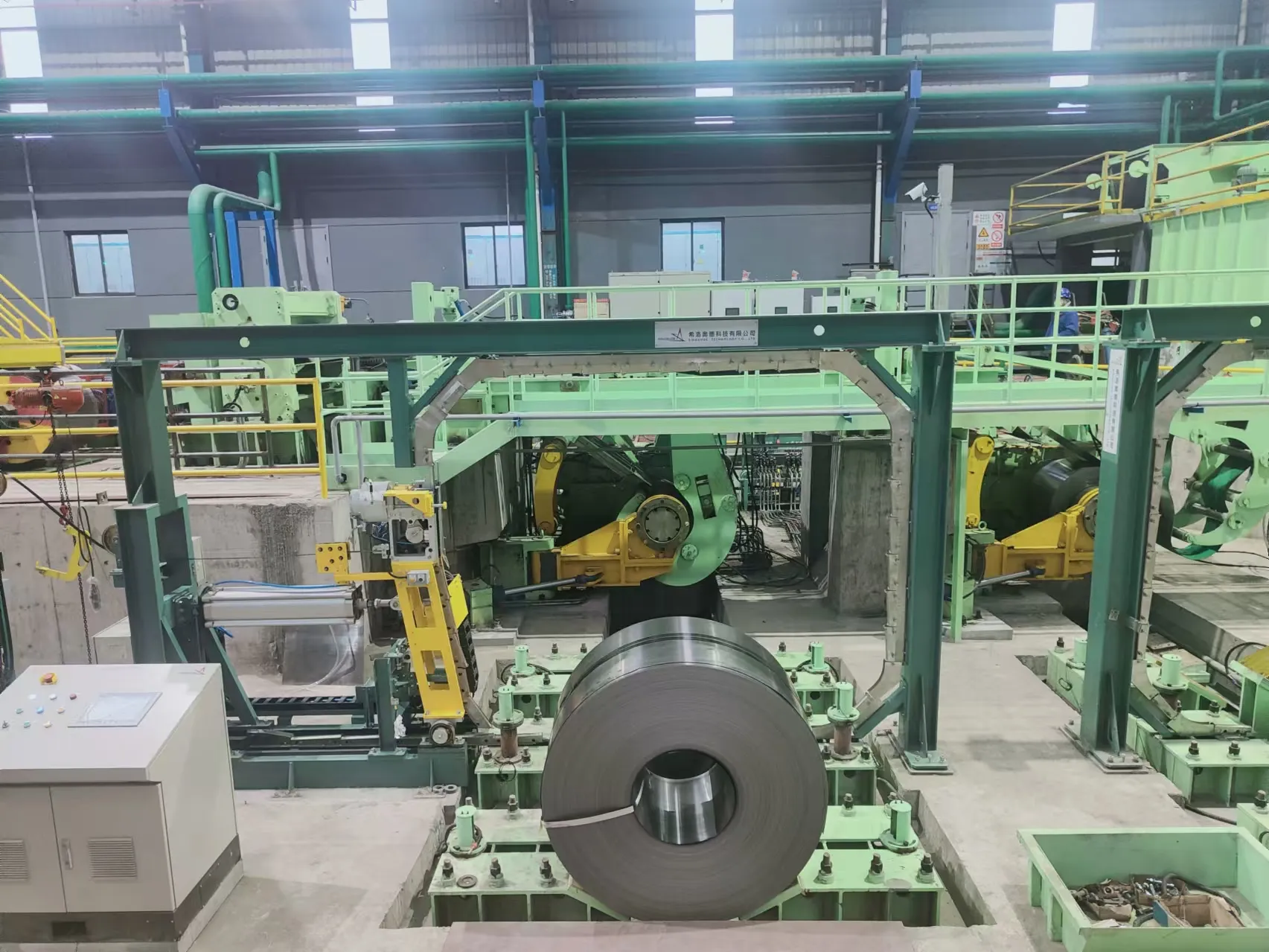 Key Technologies of AGC SystemThe hydraulic AGC system not only improves production efficiency and reduces material waste, but also adapts to the needs of different production processes, improving product consistency and reliability. In the manufacturing fields of steel, aluminum, coatings, etc., hydraulic AGC system s provide technical support for achieving high-precision and high-quality products, promoting the intelligent a
 -
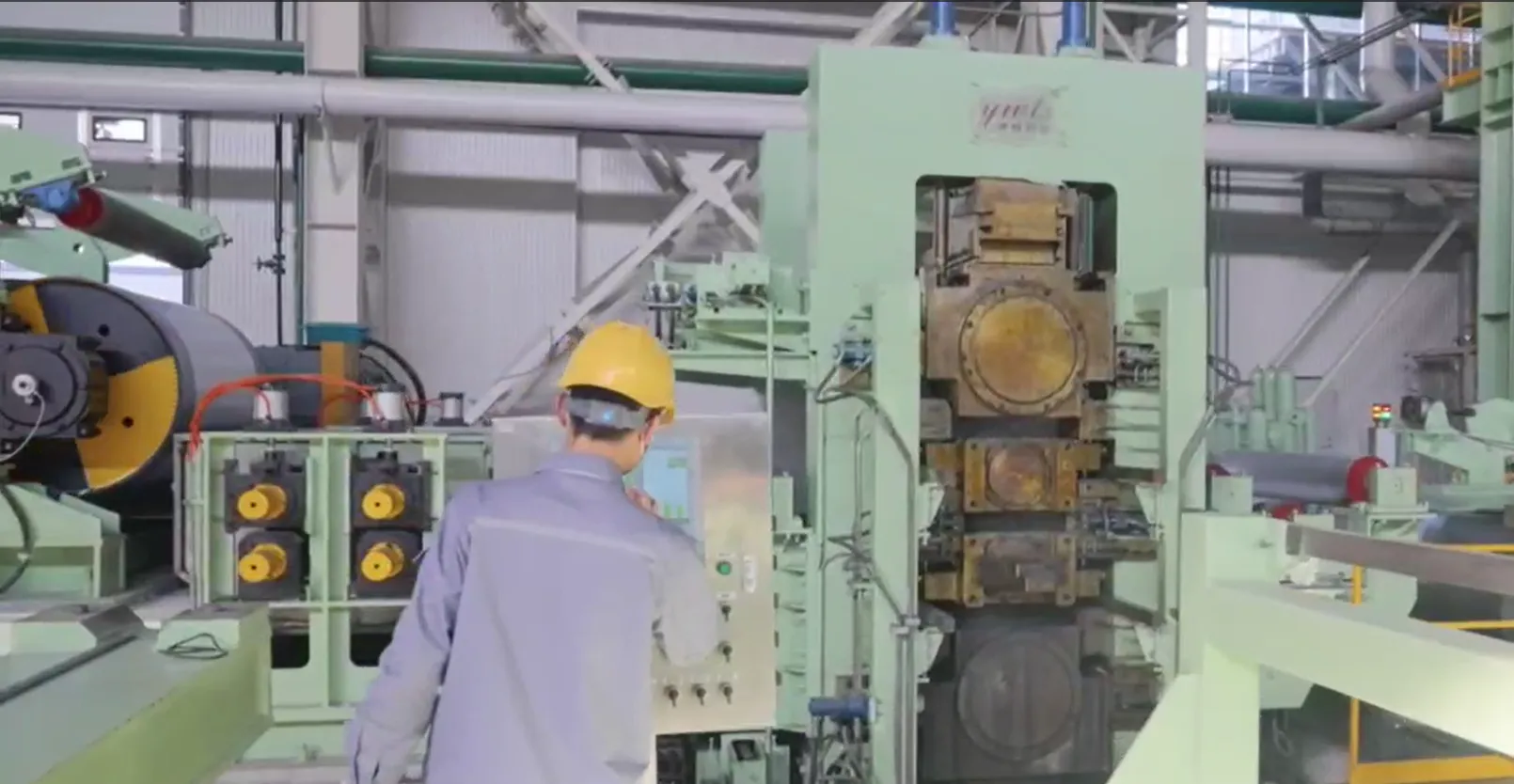 Stainless Steel Sheet Milling Techniques for Enhanced Durability and PerformanceThe Versatility of Stainless Steel Sheet Grinding Mills In the realm of industrial manufacturing and processing, stainless steel has established itself as a remarkable material, particularly in applications where hygiene, durability, and resistance to corrosion are paramount. One fascinating innovation in utilizing stainless steel is the development of specialized grinding mills, which not only en
 -
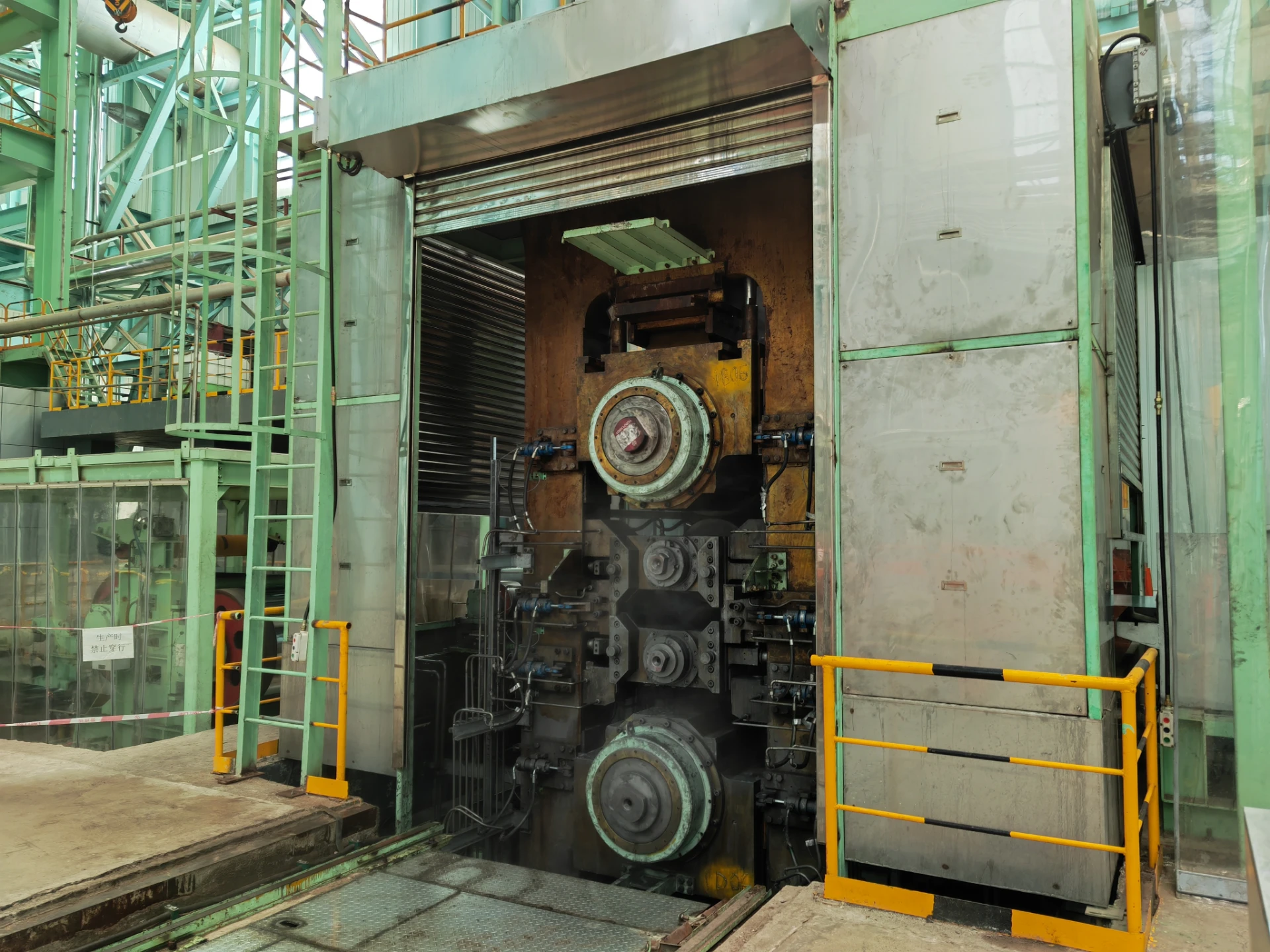 AI-Optimized Temper Rolling Mill | High PrecisionTemper rolling mill technology stands at the core of modern steel processing, delivering enhanced mechanical properties, impeccable surface finish, and the flatness required for high-performance applications. As global manufacturing upgrades to meet increasing quality standards, solutions like temper rolling mill are evolving rapidly, driving competitiveness across metallurgy, petrochemical, const


